Food
Live or frozen food, which should you choose?
Lire l'article
Découverte
If you’ve ever looked at axolotl photos online, you’ve probably noticed that they come in several different “colours” or morphs. Among the most popular are albino, gold and leucistic axolotls. Each has its own visual characteristics, as well as certain details you should know before choosing one. So, which variety is right for you?
Axolotl morphs are not different breeds or species, but genetic variations of the same species (Ambystoma mexicanum). They differ in pigmentation, which results from natural mutations or selective breeding in captivity.
The three morphs covered here — albino, gold and leucistic — are very common among hobby breeders. They are all generally as hardy and easy to keep as the “wild-type” (dark) axolotls, provided their specific needs are respected.
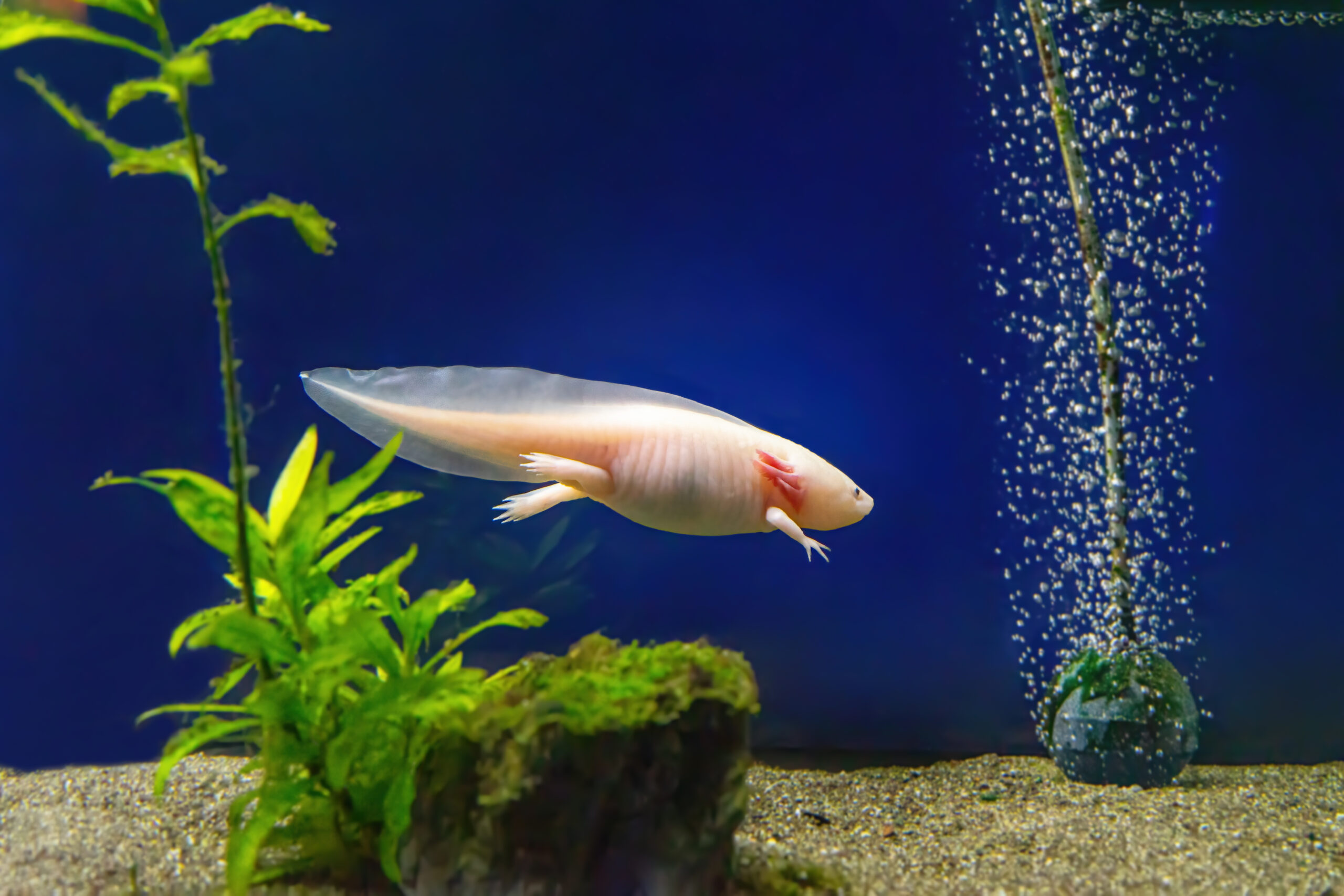
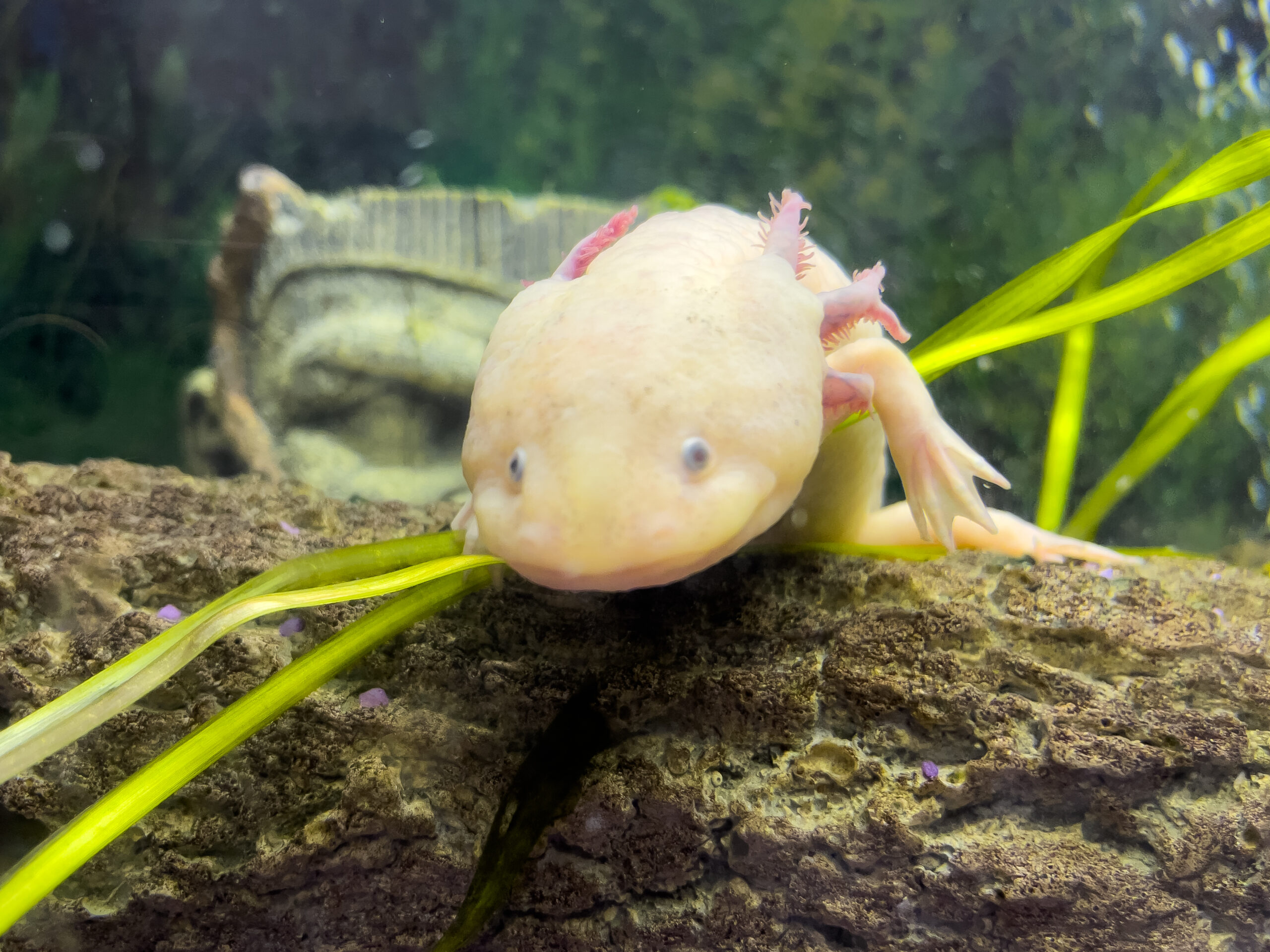
Leucistic axolotls are probably the best-known morph, often mistakenly confused with albinos. This type has a pale pink or cream-white body, with red gills and black eyes. It has a very cute and highly recognisable appearance.
Advantages:
Good to know: Leucistics may develop dark spots or uneven pigmentation as they age — this is completely normal.
An albino axolotl is recognised by its white or slightly golden skin, and especially by its red or golden eyes, which indicate a complete lack of melanin. It can be a “white” albino or a gold albino with pale yellow highlights.
Advantages:
Disadvantages:
Good to know: Albinos can be harder to photograph or observe under certain lighting because their features are so pale.
The gold (or golden) axolotl is a form of albino with yellow-gold pigmentation, often with sparkling flecks. It usually has red or golden eyes. This morph is brighter than the leucistic and shows very different nuances depending on age and lighting.
Advantages:
Good to know: Like all albinos, gold axolotls are more sensitive to light and need an adapted environment (shade, plants, decorations that diffuse lighting).
No — or very few. All these morphs behave the same. Their temperament depends mostly on their environment, age, diet and interactions with other axolotls. Stress, illness or water conditions will have far more impact than skin colour.
The choice depends mainly on your aesthetic preference — and your aquarium setup:
There is no “best” axolotl. What matters is your ability to provide a stable habitat, proper diet and minimal stress.
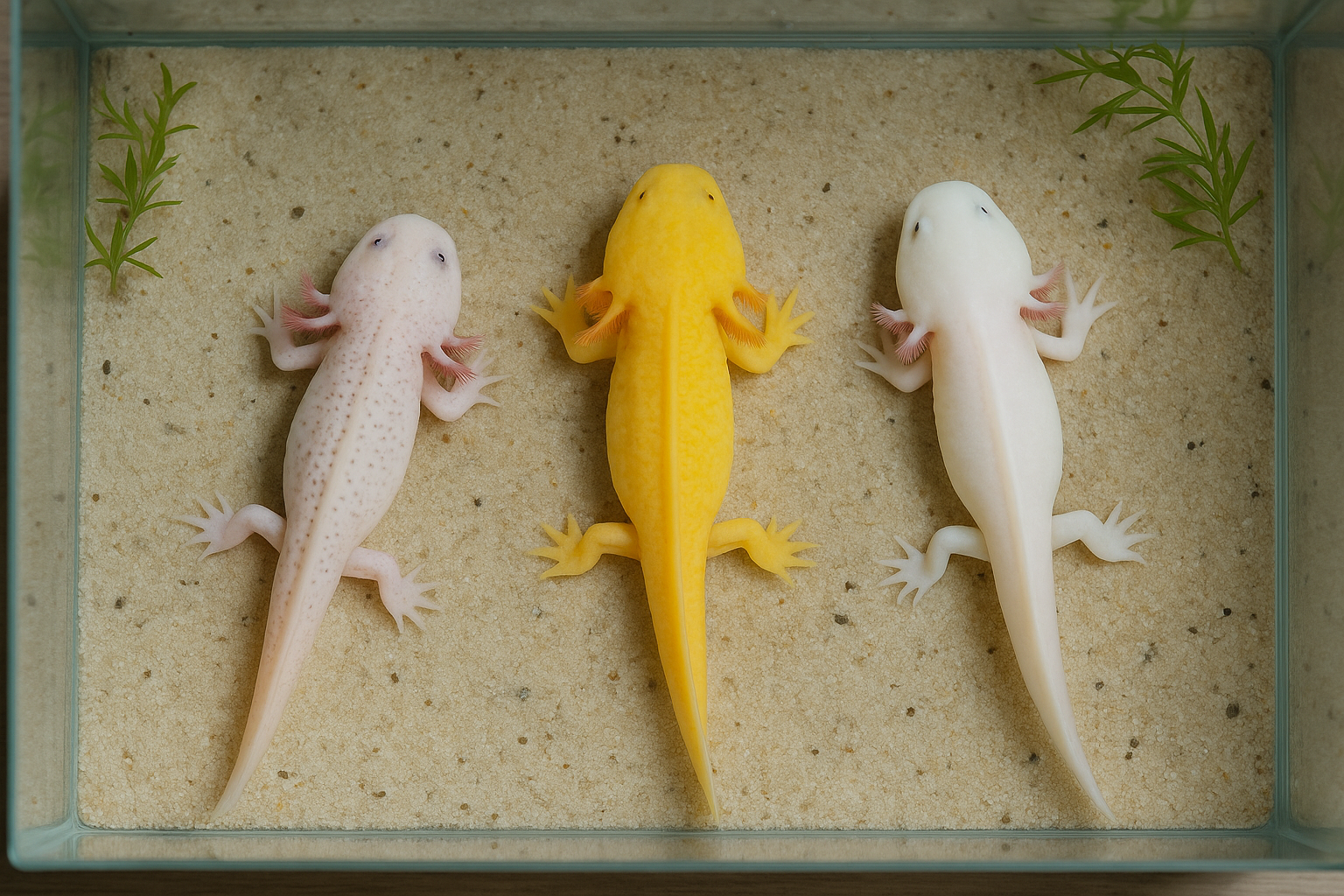
That’s perfectly possible. Different morphs can live together in the same tank, as long as they are the same size and the aquarium is large enough. It won’t affect their behaviour. If you want variety without breeding, a trio of leucistic, gold and albino makes a beautiful combination.
Albino, gold, leucistic… each axolotl morph has its own aesthetic appeal. The choice depends on your personal taste, your tank setup and how sensitive you are to lighting and care requirements. Whatever morph you choose, a well-cared-for axolotl will offer you years of quiet, curious and peaceful companionship.
Food
Lire l'article
Pratique
Lire l'article
Equipement
Lire l'article
Equipement
Lire l'article
Food
Lire l'article