Food
Live or frozen food, which should you choose?
Lire l'article
Pratique
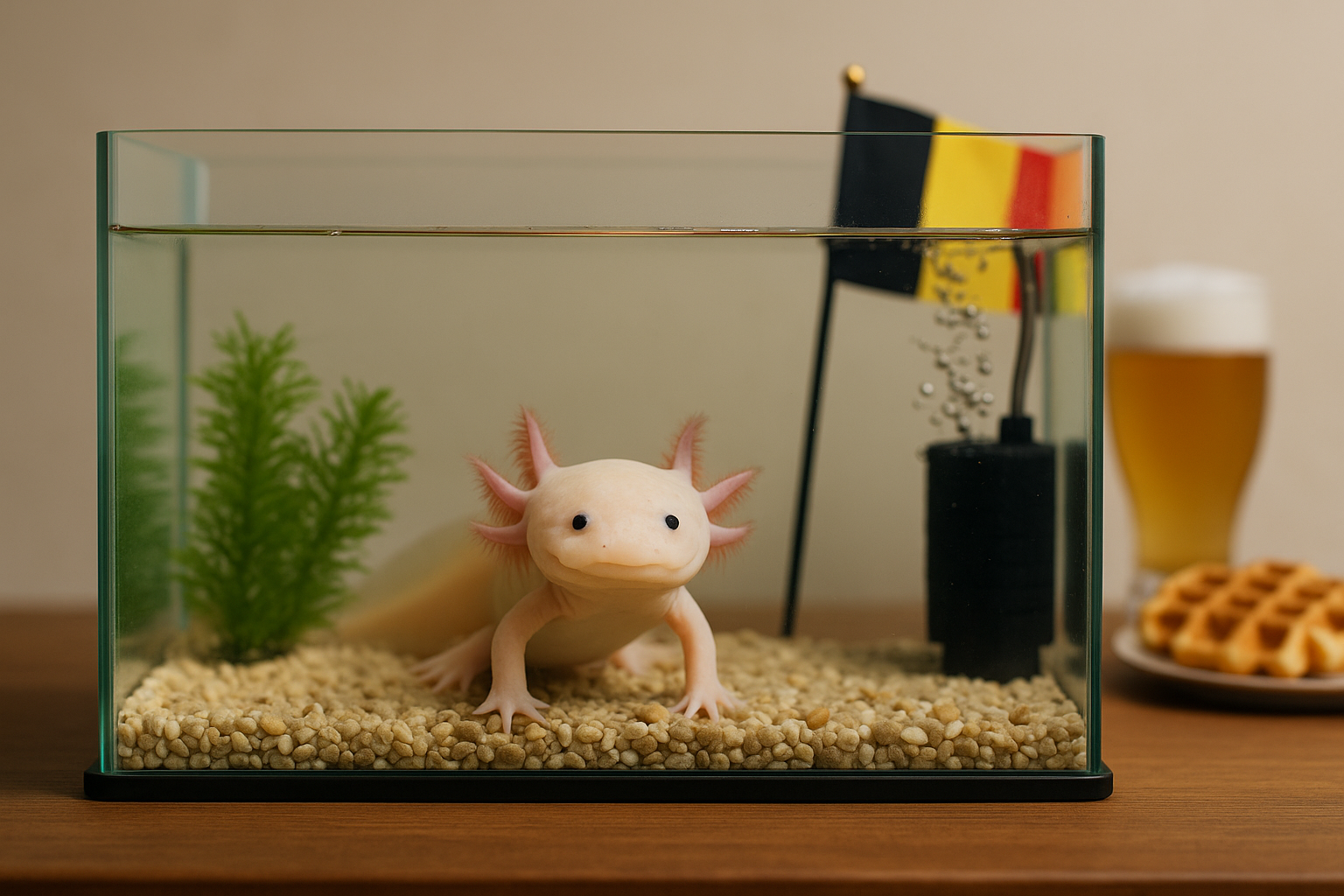
If you live in Belgium and you’re thinking about adopting an axolotl, here’s the good news: keeping this fascinating amphibian is legal. However, because Belgium is divided into three regions with different animal welfare regulations, the rules may vary depending on where you live. Here’s a full breakdown of the legislation regarding axolotls in Belgium.
No. Just like in France, the axolotl (Ambystoma mexicanum) is not classified as a traditional domestic animal. However, it is tolerated as an exotic pet (NAC) across the country. Owning one is allowed, but the specific rules depend on your region.
In Wallonia, there is an official list of authorised companion animals. The axolotl does not appear on this list, but it is generally tolerated for private ownership as long as it comes from captive breeding and proper welfare conditions are respected.
No certificate or declaration is required, but it is recommended to:
If you have any doubt, you can contact the SPW (Public Service of Wallonia).
Flanders has stricter rules regarding exotic pets. The region uses a “positive list”, meaning only species explicitly authorised may be legally kept. The axolotl is not always included on this list, which can create some legal uncertainty.
In practice, authorities tolerate axolotls if:
Before adopting, it is strongly recommended to consult the official texts on the Agentschap voor Natuur en Bos.
The Brussels-Capital Region does not have a specific regulation list regarding exotic pets like axolotls. By default, the species is allowed as long as it is not dangerous or protected under European law. Since axolotls are non-dangerous and always captive bred, they are tolerated without issue.
Still, it is recommended to:
If you intend to breed and sell axolotls, regulations become stricter. Indeed:
These obligations vary greatly between regions. When in doubt, contact your regional veterinary services or environmental authority.
In theory, yes. But be cautious when travelling between regions or abroad. An axolotl legally kept in Brussels might not be fully compliant with Flemish rules.
When travelling, always carry:
Outside the EU or to highly regulated countries (such as Switzerland or Germany), additional customs formalities may apply.
Yes, you can legally keep an axolotl in Belgium — but the rules depend on your region. In Wallonia and Brussels, axolotls are tolerated as long as welfare standards are respected. In Flanders, the legal framework is stricter, so always check before adopting. Choose a reputable breeder, keep proof of origin, and stay updated with any legal changes. A bit of vigilance will save you a lot of trouble.
Food
Lire l'article
Pratique
Lire l'article
Equipement
Lire l'article
Equipement
Lire l'article
Food
Lire l'article