Food
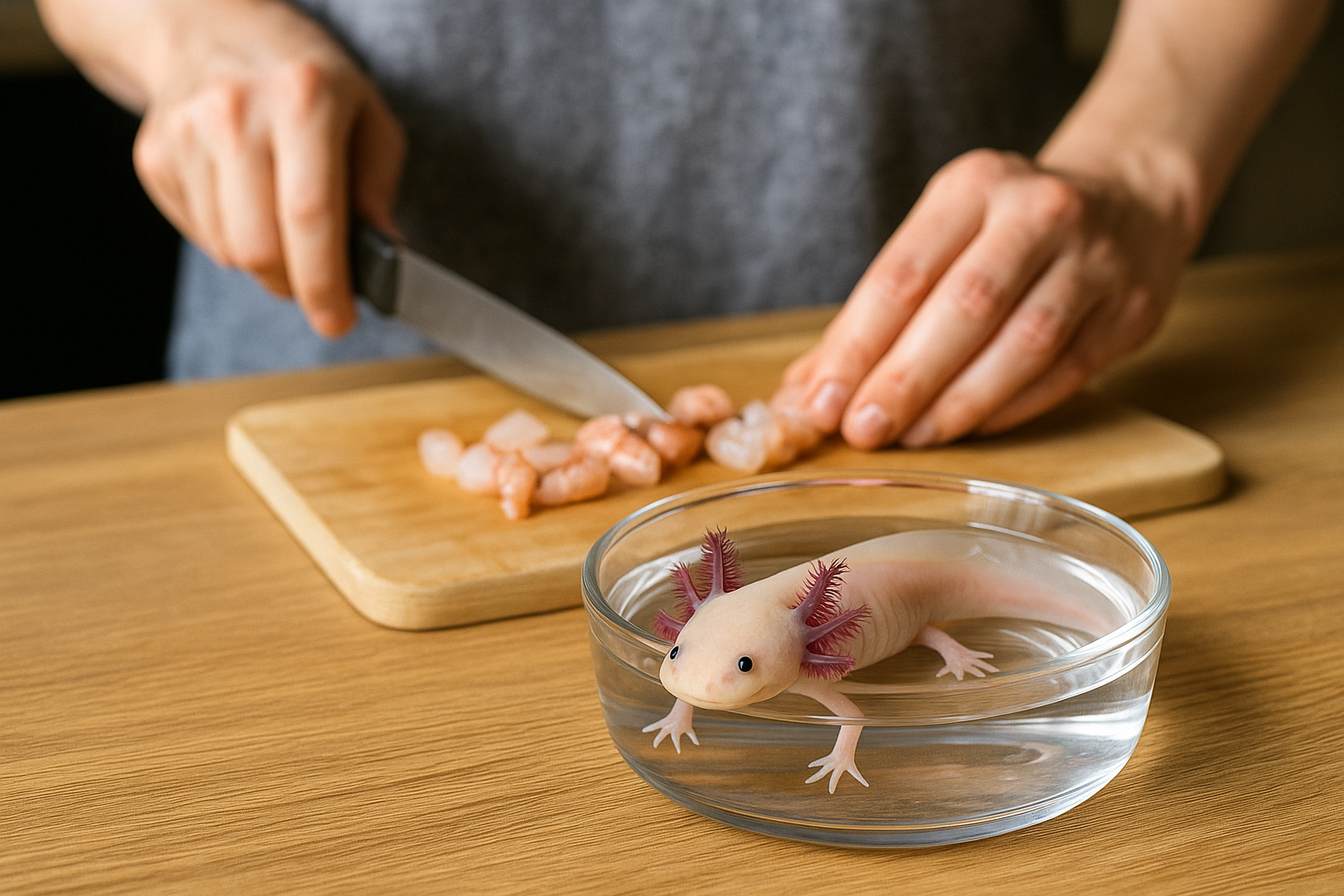
Live or frozen food, which should you choose?
Lire l'article
Equipement
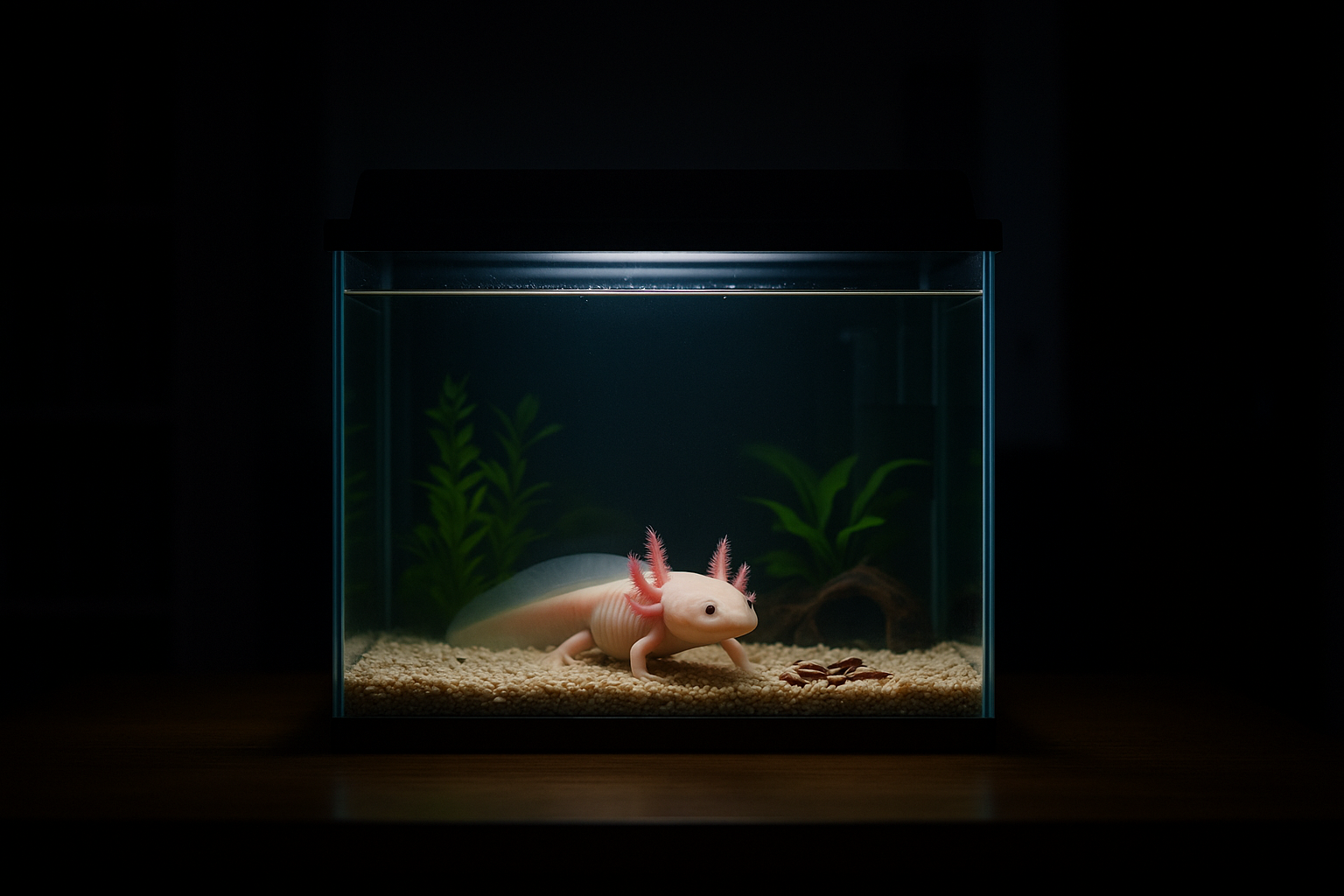
When setting up an aquarium for an axolotl, you may wonder whether you need to install a specific lighting system. Unlike many ornamental fish, axolotls do not need light to live, and poor lighting management can even have negative effects on their health and well-being. So should you install lighting? And if so, under what conditions?
Axolotls are nocturnal and crepuscular animals. In their natural habitat, they live in dark, deep, and turbid waters, often sheltered from direct light. They therefore have little affinity for bright environments. Their eyes, which are small and not very mobile, are not designed to handle strong or prolonged light intensities.
It has no physiological need for artificial light: no photosynthesis, no specific hormonal regulation via light, unlike other animals. This means that an axolotl can live perfectly well in an aquarium without any direct light source.
Yes, if it is too intense or poorly managed. Light that is too strong or left on for too long can cause:
Light stress is often visible in the form of retracted gills, loss of color intensity, or avoidance behavior. In extreme cases, the axolotl spends the whole day hiding or stops feeding.
If you put live plants in the aquarium, lighting may be necessary for their growth. In this case, choose species that adapt to low light (anubias, Java ferns, Java moss, etc.) and use dimmable LED lighting.
The trick is to filter the light using floating plants (duckweed, pistia, salvinia, etc.) to create shaded areas. This allows you to provide lighting for the plants without exposing the axolotl directly to harsh light.
If you still decide to equip your tank with a light source, here are a few recommendations:
Avoid powerful fluorescent tubes or overly intense LED strips designed for reef lighting (for corals, for example).
If the lighting is already installed or cannot be removed (e.g., a combination aquarium with a lid), there are several ways to mitigate its effects:
An axolotl that has dark shelters (caves, plants, hiding places) will tolerate occasional lighting better than if it is exposed all day long.
Not really. Their eyesight is rather poor, whether in bright light or darkness. They navigate mainly using their sense of touch and their lateral line, which detects vibrations in the water. This explains why they can feed even in the dark, locating prey by movement.
There is therefore no need to try to light up the tank so that it can “see better”: this will not help it and may even disturb it. It will thrive with natural ambient light in the room.
Lighting is not essential for an axolotl and can even be a source of stress if not managed properly. If you want to light your tank for aesthetic reasons or to maintain plants, opt for soft, subdued lighting and only turn it on for a few hours a day. The most important thing is to respect the axolotl’s nocturnal lifestyle in order to preserve its peace and health.
Food
Lire l'article
Pratique
Lire l'article
Equipement
Lire l'article
Equipement
Lire l'article
Food
Lire l'article