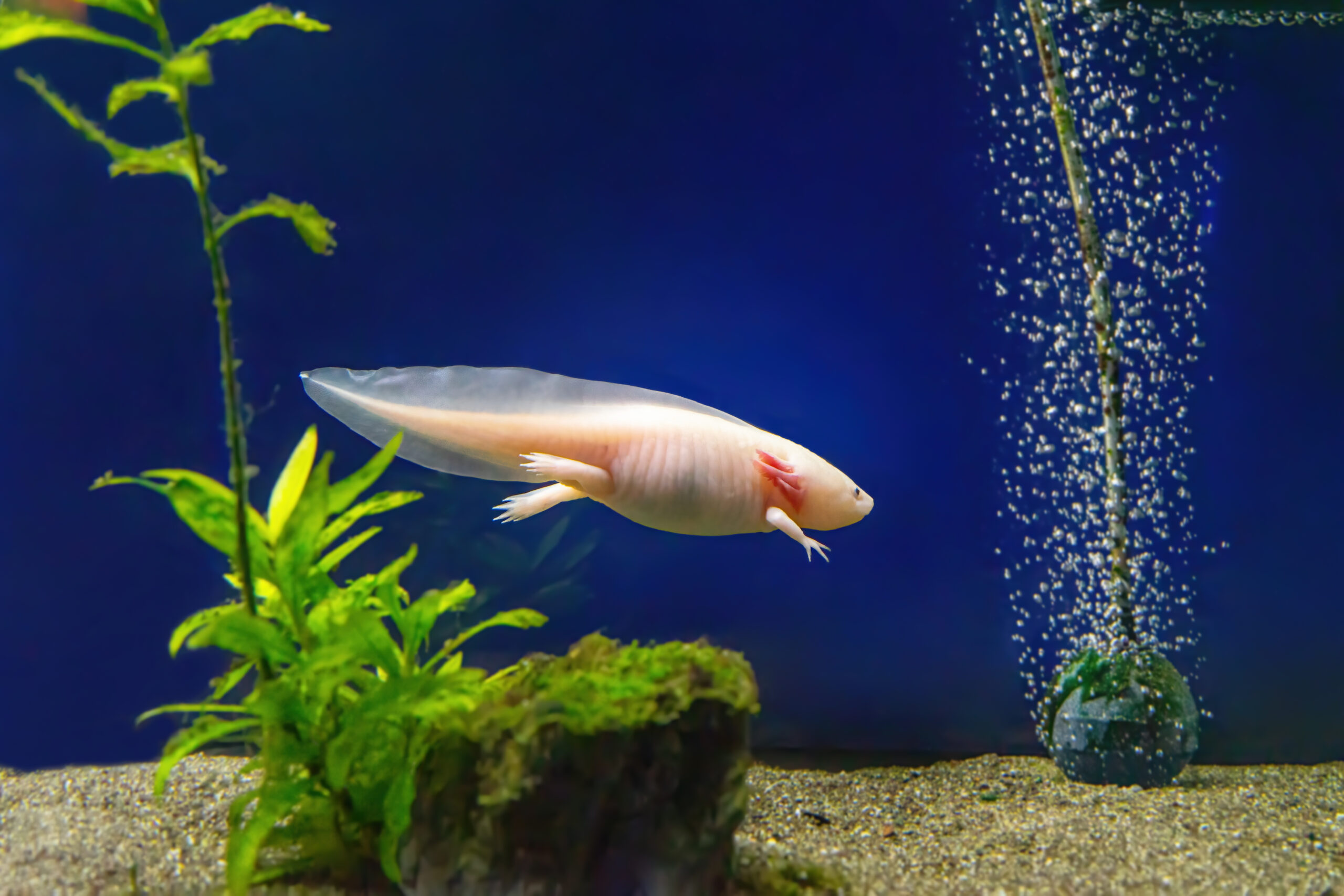
Food
Live or frozen food, which should you choose?
Lire l'article
Health
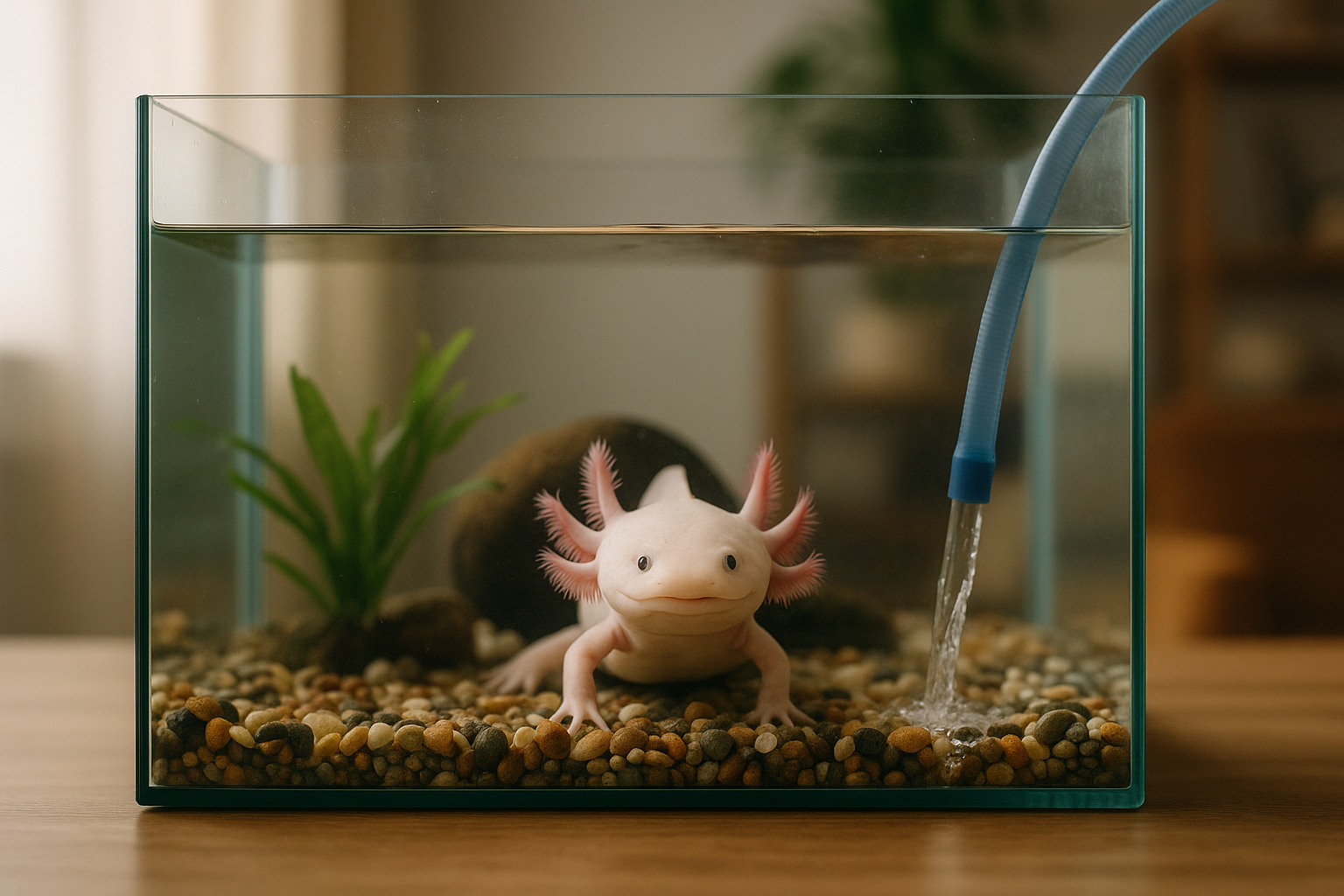
Cleaning the aquarium is one of the most important tasks to ensure your axolotl’s well-being. A poorly maintained environment can cause stress, illness, and even water poisoning. But be careful: poor cleaning practices can do more harm than good. Here is a complete guide to maintaining your axolotl’s tank safely.
The axolotl is highly sensitive to water quality. Unlike some hardier fish, it cannot tolerate pollution spikes or sudden changes in parameters. A poorly maintained aquarium can lead to:
Good maintenance also helps maintain a stable nitrogen cycle, which is essential for a healthy ecosystem.
There’s no need to do a deep clean every week. Good maintenance is done through small, regular actions:
A simple but regular routine is better than a sudden, occasional deep clean.
Here’s the basic kit for safe and effective maintenance:
Water changes should be gradual. Replacing 20 to 30 % of the total volume each week is ideal. Here are the steps:
There’s no need to remove the axolotl for a simple water change. If it becomes agitated, leave it alone—it will hide until you’re done.
Yes, regularly. The aquarium floor traps organic waste, food remains, and droppings. A siphon allows you to remove debris from dirty areas without fully draining the tank. If you use fine sand, run the siphon gently to avoid sucking up the substrate.
Avoid gravel or large-grain substrates, as axolotls can accidentally swallow them while feeding, which is dangerous.
Algae or lime deposits on the glass can be removed with:
Do not scrape too hard, especially if the tank is made of plexiglass. Never clean the glass with household products, even if rinsed—residues can be deadly.
The filter is the biological heart of the tank. You should never clean it completely or under tap water. Here’s how to do it:
A good filter requires little maintenance if the rest of the tank is well managed.
This is not recommended except for major cleaning (tank change, renovation…). The axolotl is fragile and sensitive to stress and temperature changes. If you must move it:
Avoid direct contact with your hands unless absolutely necessary (illness, injury, etc.).
Cleaning the aquarium is an essential ritual to maintain a healthy environment for your axolotl. By keeping a regular schedule, using the right equipment, and avoiding abrupt actions, you ensure your aquatic companion has a stable, clean, and safe habitat. Proper maintenance is often the key to a long life in captivity, free from disease and complications.
Food
Lire l'article
Pratique
Lire l'article
Equipement
Lire l'article
Equipement
Lire l'article
Food
Lire l'article