Food
Live or frozen food, which should you choose?
Lire l'article
Food
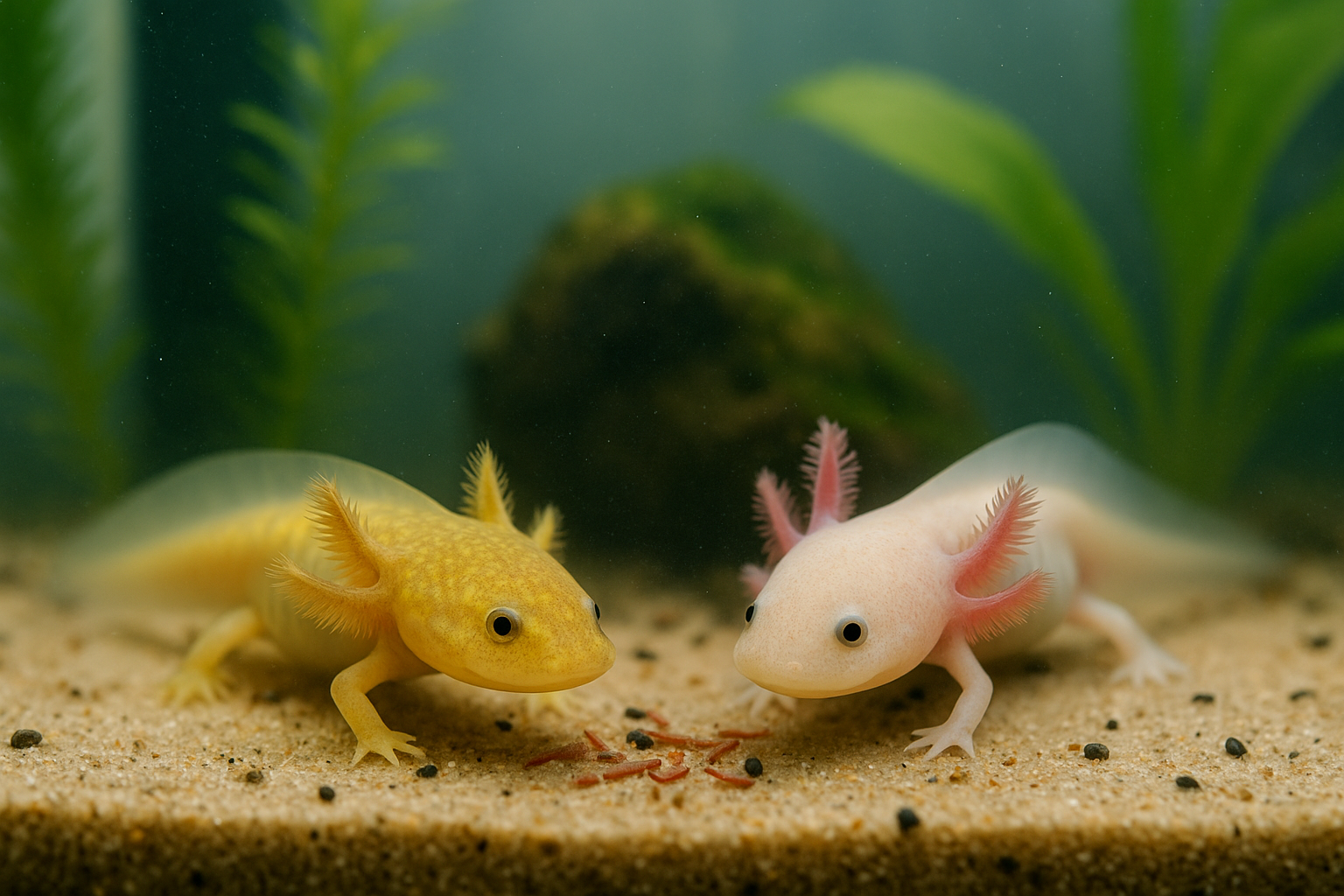
During its first months of life, a juvenile axolotl goes through a crucial phase: its rapid growth requires a rich, suitable and well-distributed diet. It is also a period during which feeding mistakes can have serious consequences. To maximise its chances of survival and good health, it is essential to understand its specific nutritional needs at this stage.
An axolotl is considered juvenile from the end of the larval stage (generally at 3–4 cm) up to around 15–18 cm. During this period, growth is rapid, metabolism is high, and nutritional needs differ greatly from those of an adult.
A juvenile fed poorly or given unsuitable foods may develop growth issues, deficiencies or a weakened immune system.
A juvenile axolotl’s diet must be high in protein, easy to digest and appropriately sized. The best options are:
Unlike adults, juvenile axolotls must be fed often. Here is a recommended schedule:
It is important not to overload the aquarium with uneaten food, as this quickly degrades water quality. Observe your axolotl: if it refuses to eat, you may be giving too much or it may be stressed.
Yes, ideally. Alternating food sources helps prevent deficiencies and ensures balanced nutrition. A base of bloodworms can be complemented with daphnia or pellets. The key is to find what your axolotl accepts, as some can be quite picky.
Avoid giving the same food every day for several weeks. An axolotl fed only bloodworms, for example, may become overweight or develop digestive problems.
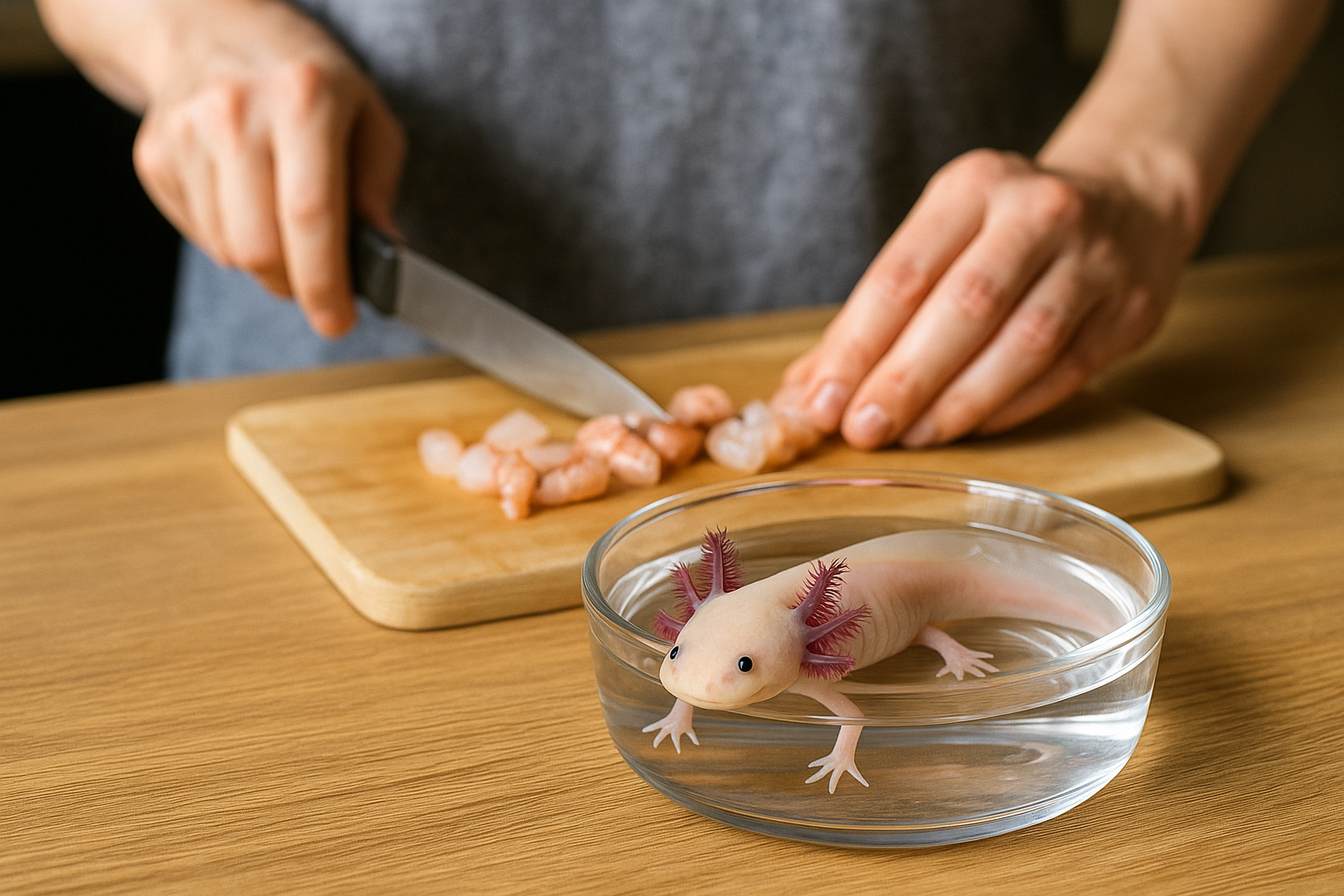
Live foods stimulate a juvenile’s hunting instinct, which is beneficial for behaviour. However, live foods carry sanitary risks (parasites, bacteria). Frozen foods (bloodworms, brine shrimp) are safer, provided they are properly thawed and rinsed before feeding.
Tip: you can mix both. Give live food occasionally, but keep controlled foods as the main base.
Yes, but pay attention to size. Pellets for adult axolotls are often too large for juveniles. Choose “juvenile” pellets or soak adult pellets for a few minutes to soften them so the animal does not choke or spit them out.
Check the composition: good pellets should have a high level of animal protein (at least 40 %) and as few plant ingredients as possible.
Some foods must be completely avoided, especially for juveniles:
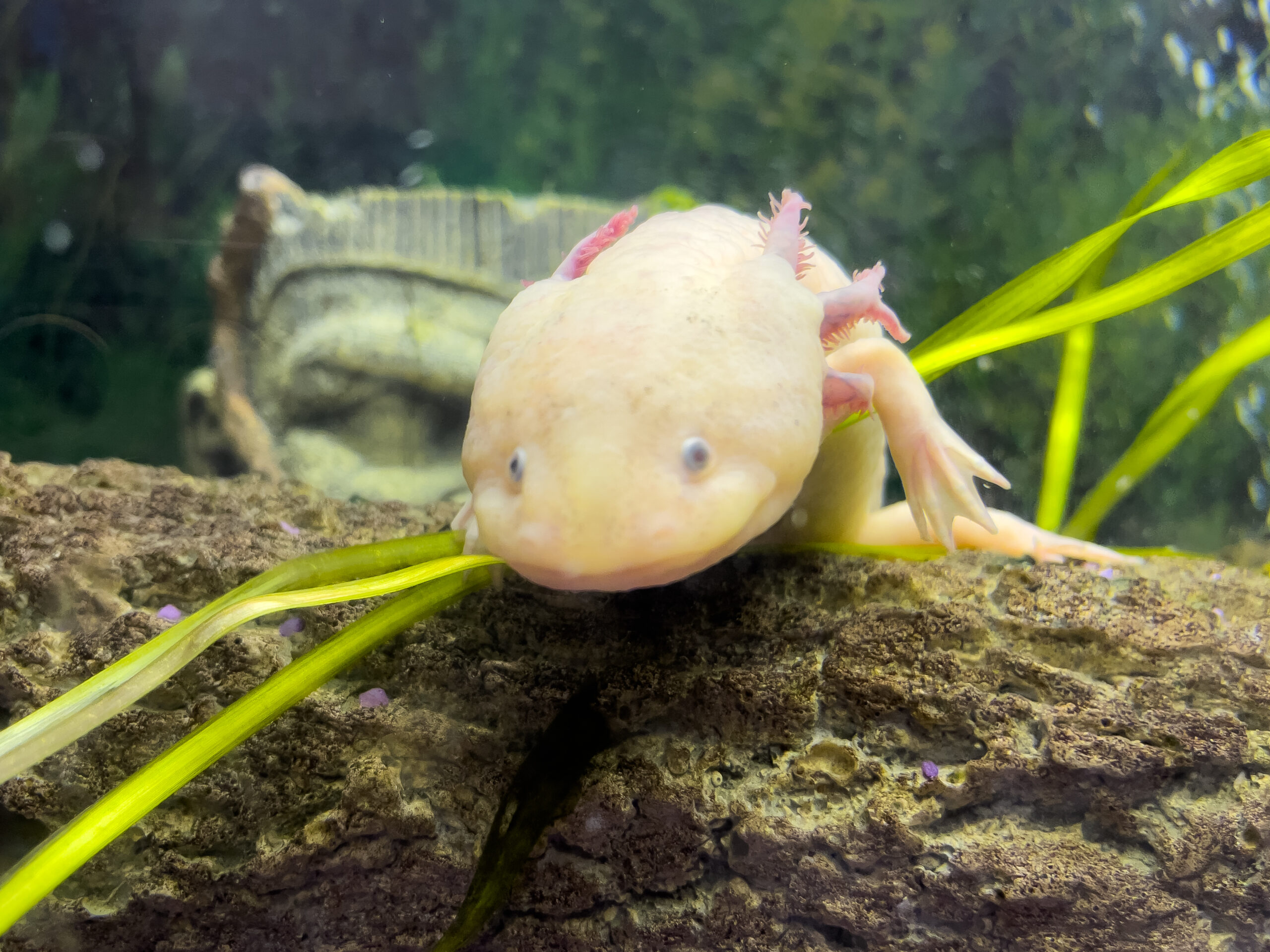
A well-fed juvenile is active (especially at night), moves smoothly, has well-spread gills, and gains weight quickly. If it is lethargic, refuses to eat or floats regularly, you should reassess quantity, food type or water quality.
Tracking weight is not always easy, but you can observe its silhouette: a body that is too thin or sunken indicates underfeeding. Conversely, a constantly swollen belly may indicate excess food or poor digestion.
The juvenile stage is a decisive period in an axolotl’s life. A suitable, varied, rich and well-measured diet ensures healthy growth, strong immunity and prepares the animal for a stable adult life. Investing time in feeding now helps prevent many problems later.
Food
Lire l'article
Pratique
Lire l'article
Equipement
Lire l'article
Equipement
Lire l'article
Food
Lire l'article