Food
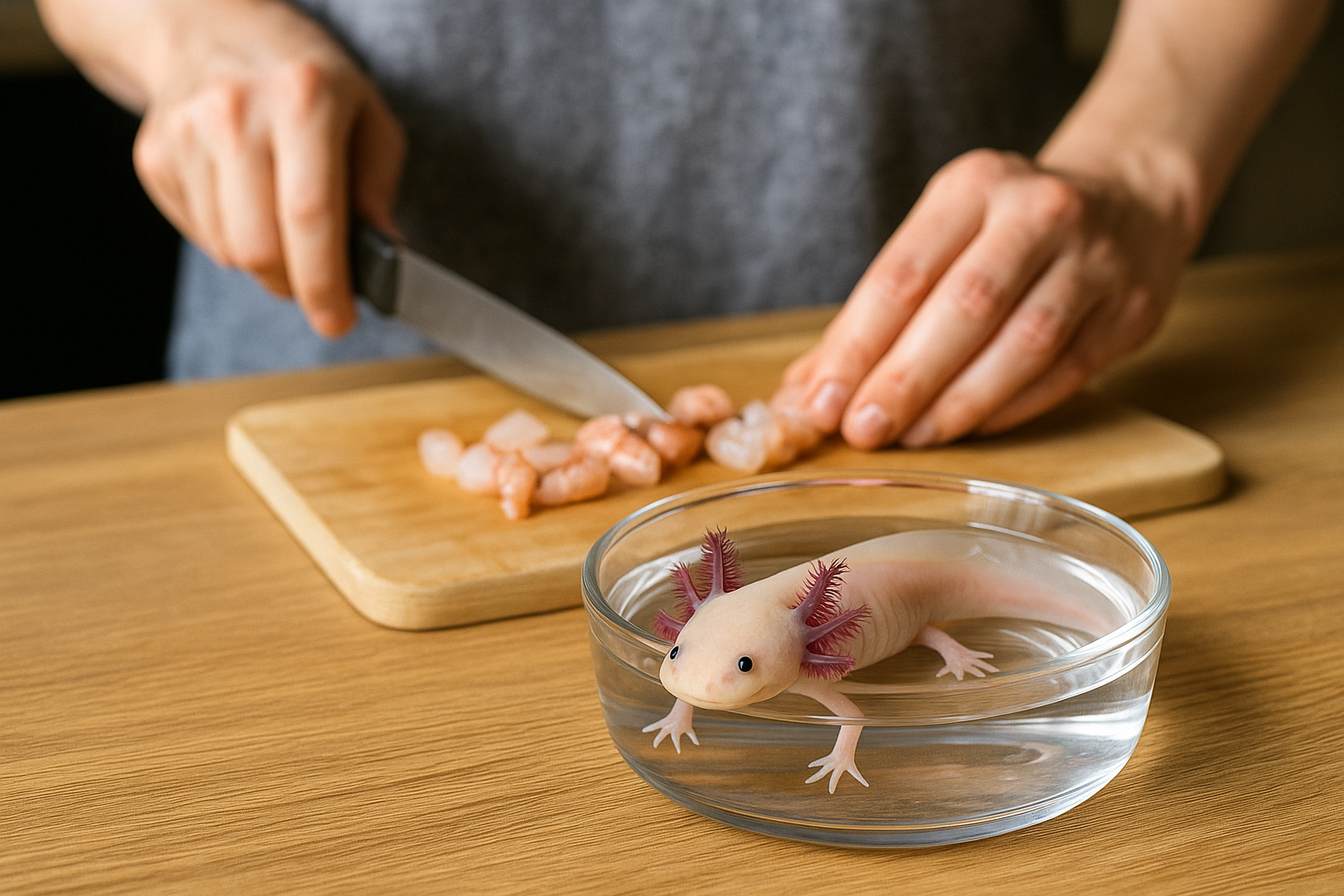
Live or frozen food, which should you choose?
Lire l'article
Equipement
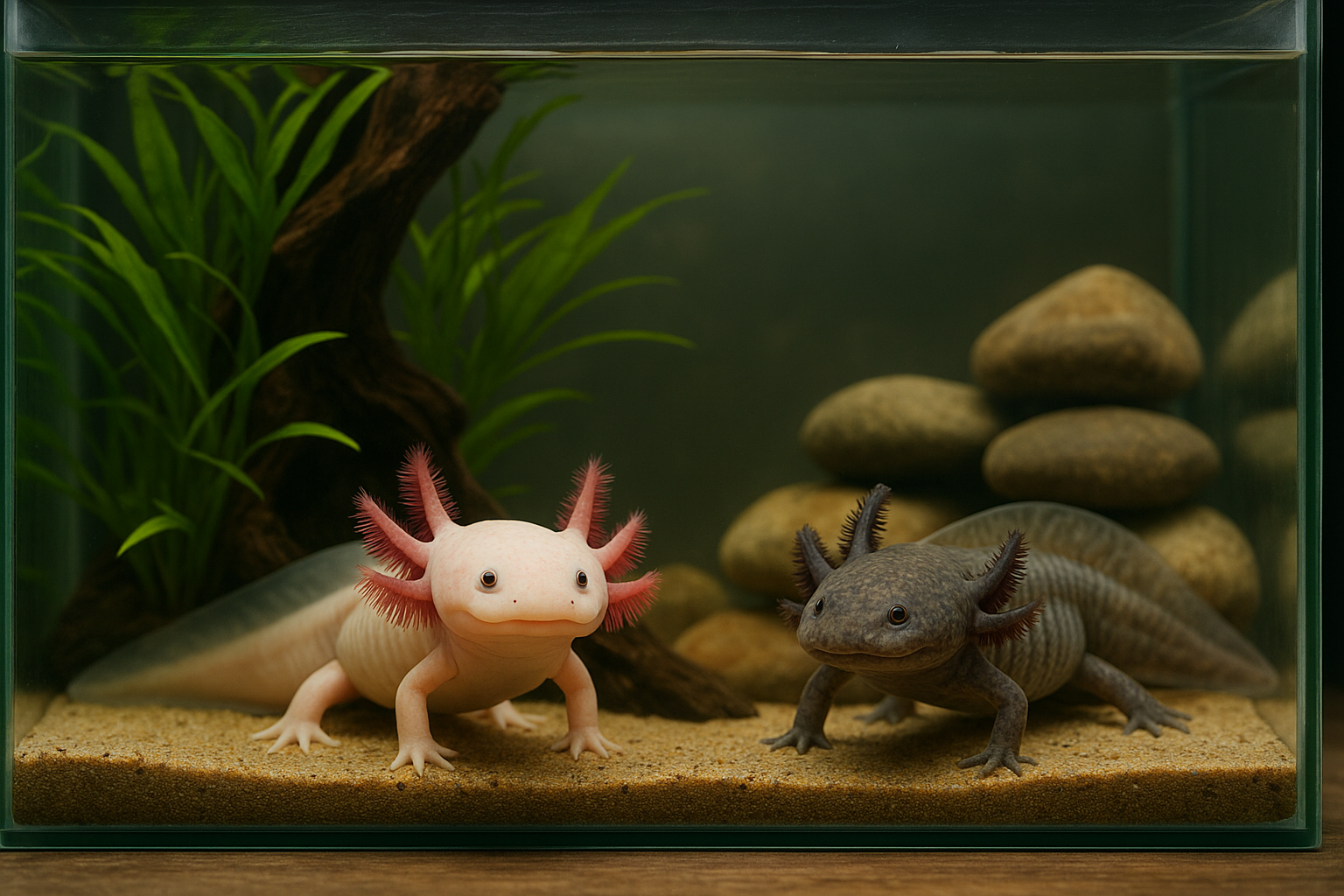
Creating a suitable environment for an axolotl is not just a matter of filling a tank with water. The layout of the aquarium plays a key role in its well-being, health and even behaviour. But should you choose natural plants or a more mineral setup with rocks and artificial hides? Here’s a complete overview of the advantages, drawbacks and recommendations.
The axolotl is a calm, low-activity animal that appreciates hiding spots, dim areas and a stable environment. It is sensitive to stress, bright lighting, sudden movements and frequent changes in its surroundings. A good setup should therefore provide:
Mineral décor is often preferred by beginners. This includes non-living elements such as stones, driftwood, ceramics, clay pots or resin caves. This type of setup offers several advantages:
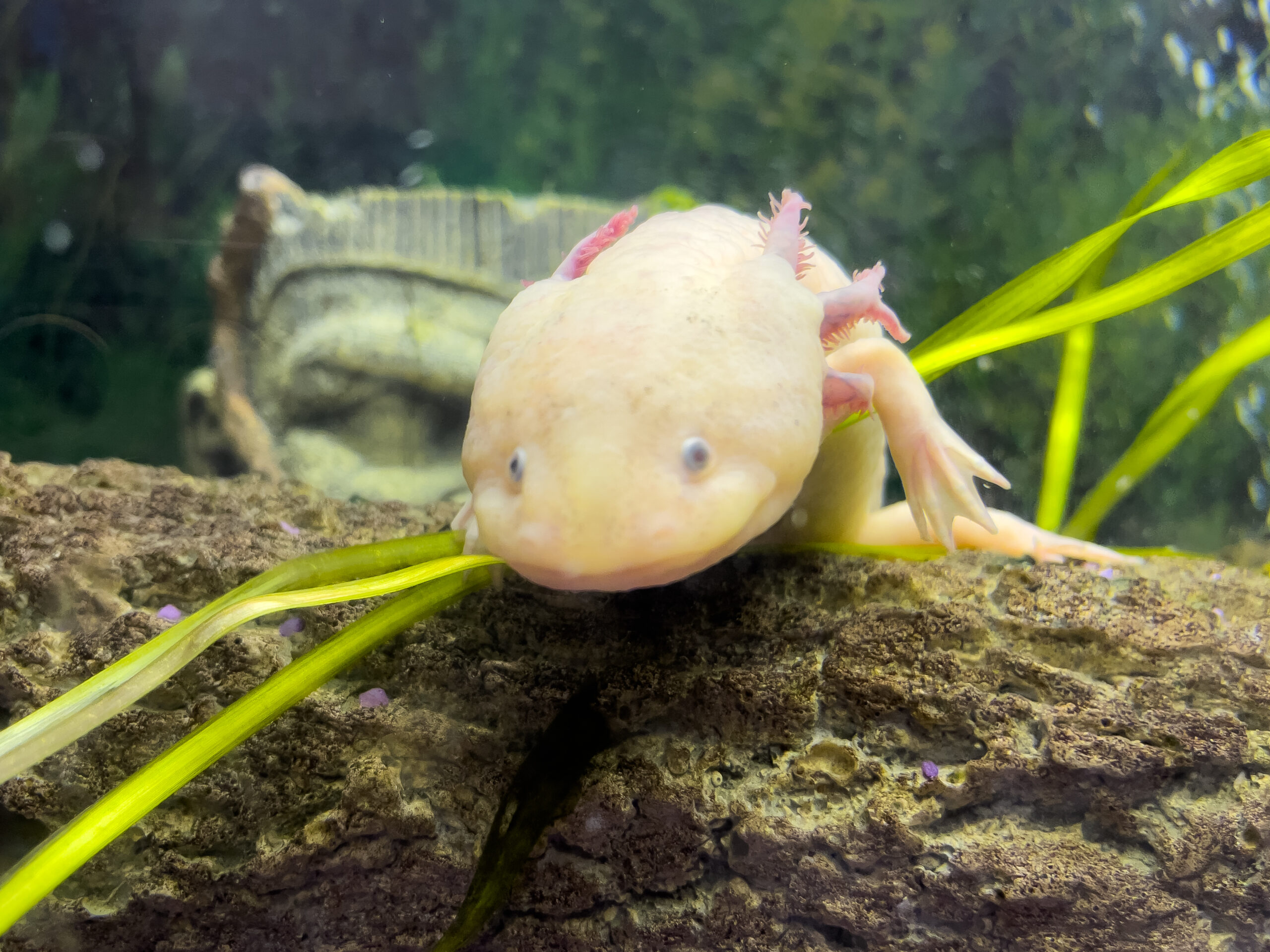
Aquatic plants bring colour, life and help maintain biological balance (nitrate absorption, oxygenation, etc.). They also provide shade and resting areas for axolotls. However, adding plants requires some precautions:
Axolotls do best with hardy plants that grow slowly and tolerate cooler temperatures (16–20 °C / 60–68 °F). Good options include:
There is no single answer—it’s more a matter of balance and personal preference. Here are some typical setups:
Many keepers choose a mixed setup: mostly mineral décor with a few hardy plants attached to rocks or driftwood. This offers the benefits of both approaches:
An axolotl doesn’t need a lush underwater garden to thrive. What it truly needs is a calm, secure environment with minimal stress. Whether you choose a mineral setup or a planted aquarium, the key is to respect its specific requirements regarding light, temperature and hiding places. A well-designed tank will be beneficial for your axolotl—and enjoyable for you to observe every day.
Food
Lire l'article
Pratique
Lire l'article
Equipement
Lire l'article
Equipement
Lire l'article
Food
Lire l'article