Food
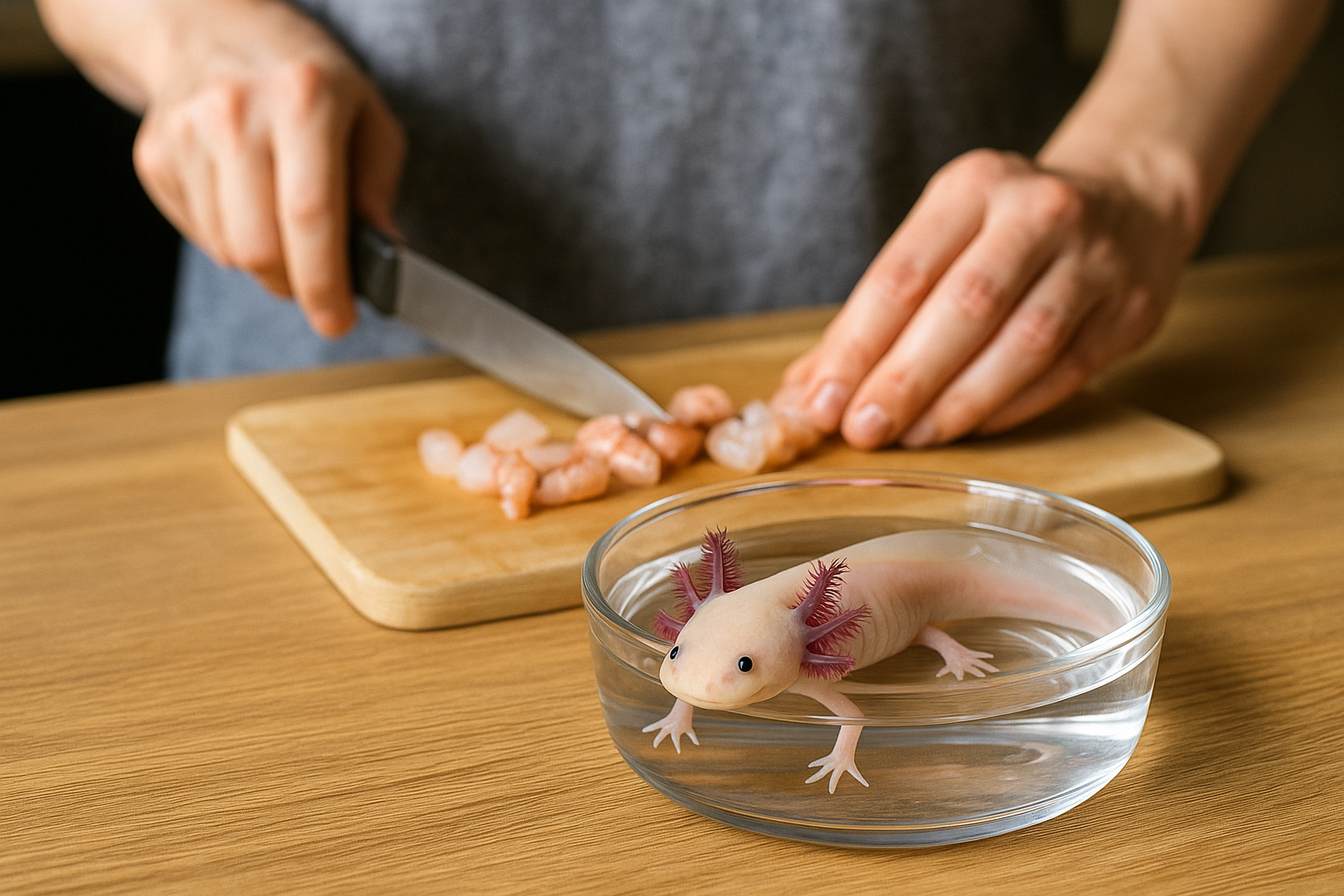
Live or frozen food, which should you choose?
Lire l'article
Equipement

Before welcoming an axolotl into its aquarium, it is essential to understand how the nitrogen cycle works. This biological process, often ignored by beginners, is the foundation of a stable and healthy environment for any aquatic animal. A poorly managed cycle can lead to water poisoning and even the death of your axolotl.
The nitrogen cycle is a natural process that transforms waste produced in the aquarium (excrement, uneaten food, decaying leaves…) into less toxic compounds thanks to the action of beneficial bacteria. It occurs in three main stages:
This cycle is invisible to the naked eye, yet vital for keeping the water non-toxic. Without it, waste accumulates and quickly poisons the axolotl’s environment.
Axolotls are particularly sensitive to water quality. They breathe through their gills, skin and lungs. High concentrations of ammonia or nitrites can cause:
Placing an axolotl in an uncycled aquarium exposes it directly to dangerous substances. The nitrogen cycle is a basic requirement, not an option.
The cycle develops gradually and can take 3 to 6 weeks. Here’s how to proceed:
The cycle is considered complete when ammonia and nitrites reach zero and nitrates begin to appear. That is the sign that beneficial bacteria are established.
The bacteria responsible for the nitrogen cycle do not float freely in the water: they colonise porous surfaces, especially the biological media inside the filter (sponges, ceramic rings…). Without filtration — or if the filter is cleaned too harshly — these bacteria die and the cycle collapses.
Practical tips:
Only regular testing can confirm it. Signs of a completed cycle include:
A tank with no nitrates is not cycled. A tank with measurable ammonia or nitrites is potentially toxic. These tests should be done using liquid kits (JBL, API), far more accurate than strips.
A poorly managed cycle leads to nitrite or ammonia spikes, often deadly within hours. Always prepare the environment before introducing any living creature.
If you detect an ammonia or nitrite spike:
Setting up a secondary backup tank may be useful if levels are too high, allowing you to temporarily move your axolotl.
The nitrogen cycle is the cornerstone of any healthy aquarium. Without it, it is impossible to ensure an axolotl’s long-term survival. By understanding and respecting this natural biological process, you provide your aquatic companion with a stable, non-toxic habitat that supports a long and peaceful life.
Food
Lire l'article
Pratique
Lire l'article
Equipement
Lire l'article
Equipement
Lire l'article
Food
Lire l'article